Anthropic's growth is one of those AI stories that looks obvious after it happens. Better models, strong brand, enterprise demand, developer adoption. But when I look at it from a product-builder angle, the lesson is not simply "build a better model." Most of us are not building foundation models. We are building useful systems on top of them.
The part I find interesting is how quickly a model becomes part of a workflow. A team does not adopt AI because it is cool. They adopt it when it saves time, reduces errors, helps someone make a better decision, or unlocks a task that was previously too slow to do manually.
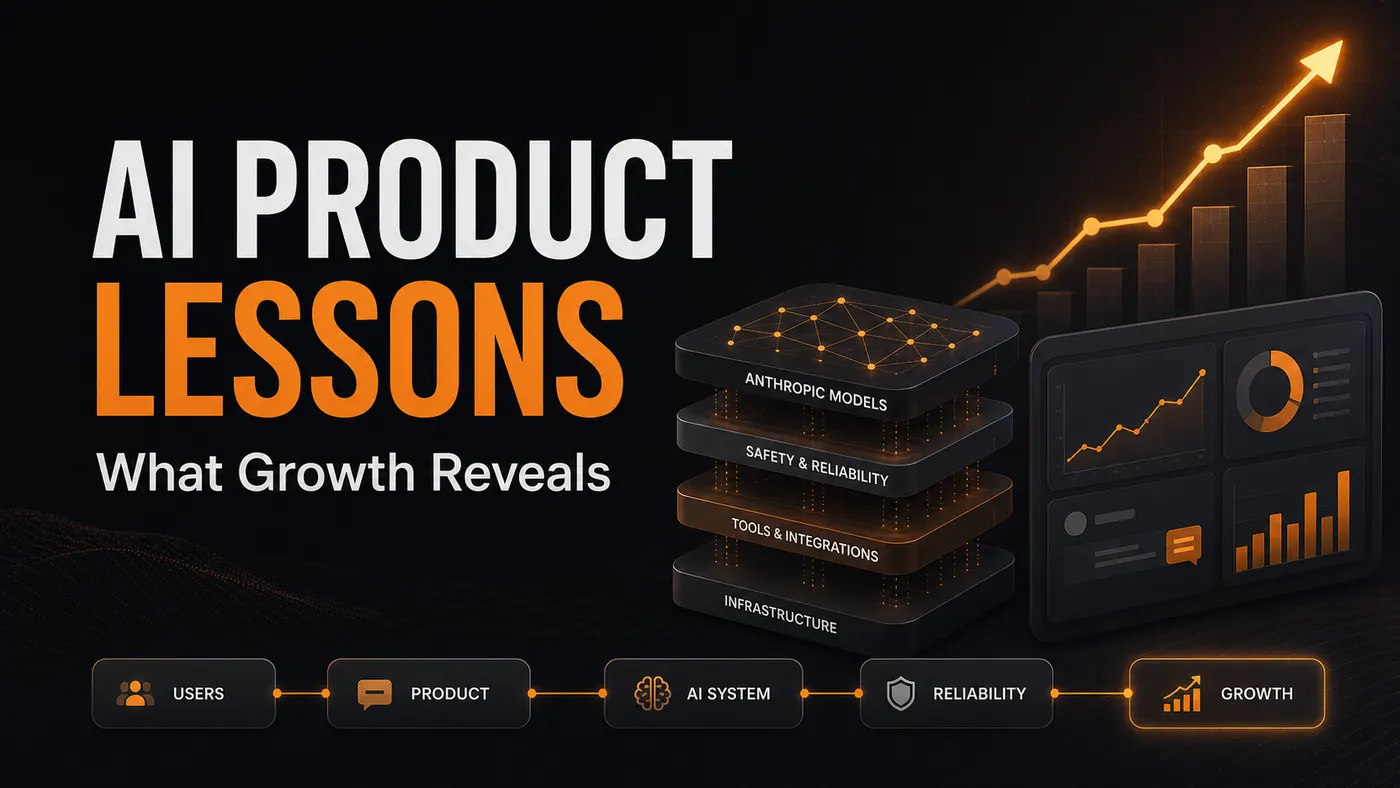
Model quality is only the first layer
A strong model matters, but it is not the whole product. The surrounding system decides whether the model becomes useful: onboarding, context, data access, permissions, evaluation, monitoring, pricing, support, and trust. In code terms, the model is a dependency. A very powerful dependency, but still a dependency.
- A great demo answers one question well. A product answers thousands of messy questions without falling apart.
- A model can reason, but the app must define the workflow.
- A chatbot is easy to launch. A trusted assistant is harder to earn.
- Enterprise buyers care about control, logs, security, and handover as much as raw capability.
The opportunity for small teams
The good news is that small teams do not need to compete with frontier labs. They can build narrower systems that understand one job deeply: lead qualification, internal knowledge search, invoice processing, content operations, customer support, compliance review. The more specific the workflow, the easier it is to make AI feel reliable.
That is where I think many client projects will live. Not "AI for everything," but "AI for this painful workflow that costs us ten hours every week." Less hype, more throughput.
The product question I keep asking: what exact human bottleneck does this AI system remove, and how will we know it worked?