Whenever AI safety comes up, it is easy to imagine a very distant sci-fi problem. But the practical version is much closer: an AI assistant sends the wrong email, leaks private context, follows a malicious instruction inside a document, or takes an action without enough confidence. That is not science fiction. That is product risk.
The recent warnings from Anthropic's leadership reminded me that powerful models do not only need better prompts. They need boundaries. If an AI system can read, decide, and act inside a business workflow, then the builder has to decide what it is allowed to do, what it must never do, and when it needs a human in the loop.
The danger is usually boring
Most failures are not dramatic. They are boring operational mistakes. A support bot invents a refund policy. A sales assistant emails a lead before the account owner approves it. A document agent treats an instruction inside a PDF as if it came from the system. A workflow updates a CRM field with guessed data instead of verified data.
- Separate read-only actions from write actions.
- Require approval before sending messages, deleting data, charging money, or changing customer records.
- Use allowlists for tools and destinations instead of giving the agent broad access.
- Log decisions in a way a human can audit later.
What I now build by default
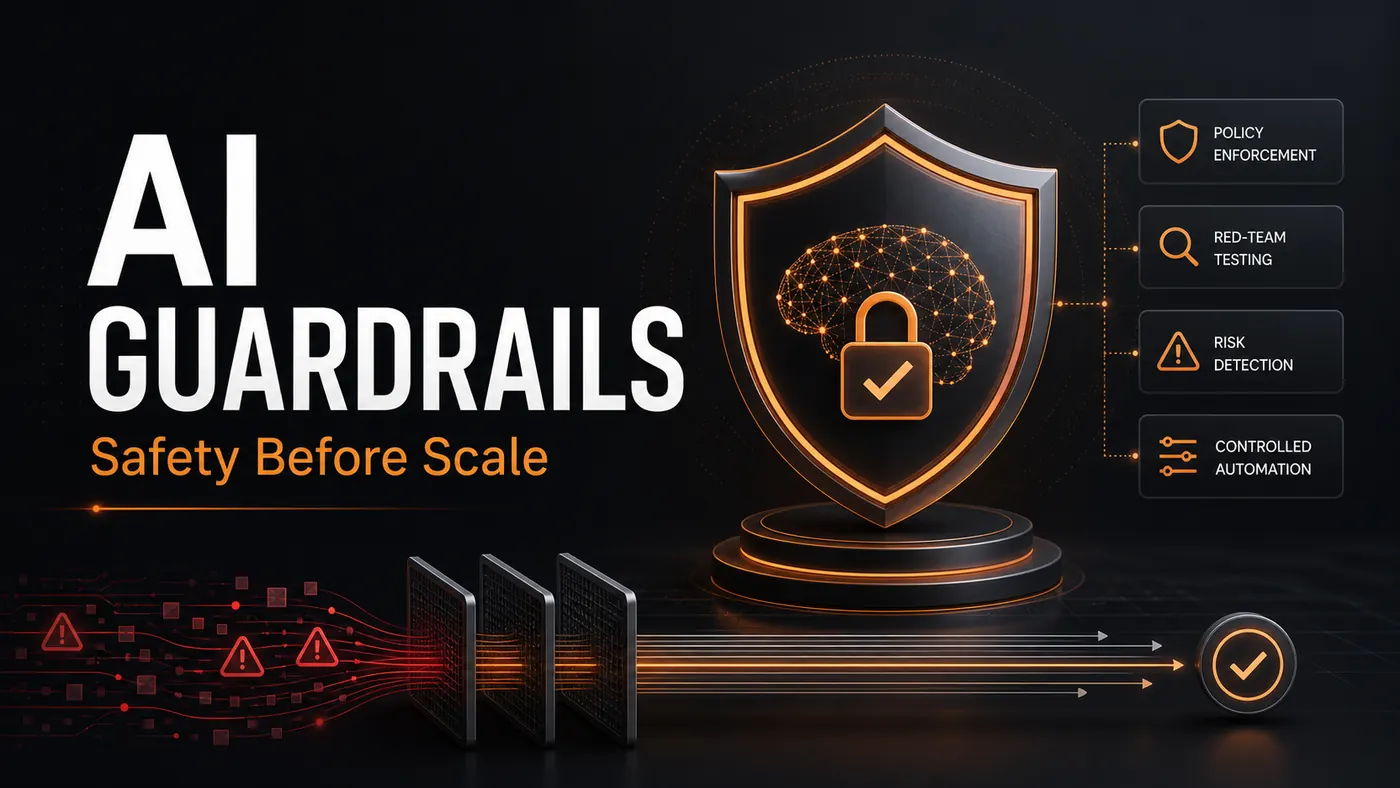
For automation systems, I like a layered approach. The model can draft, classify, summarize, and recommend. The workflow validates the shape of the output. The business rules check whether the action is allowed. A human approval step appears when risk is high. This is less flashy than a fully autonomous demo, but it is how real teams can use AI without waking up to a mess.
The best guardrails are not just warnings in a prompt. They are product decisions, API constraints, database permissions, validation code, rate limits, and review screens. Prompting is one layer. It should not be the only layer.
A useful automation is not the one that can do everything. It is the one that does the right things reliably and stops cleanly when it should.