Conversations about AGI can quickly become too abstract. Timelines, benchmarks, intelligence explosions, regulation, geopolitics. All important, but sometimes I prefer to bring the question back down to daily life: if AI becomes much more capable, what changes for the way small teams build, learn, and compete?
Listening to leaders like Demis Hassabis and Dario Amodei talk about the next few years, I keep hearing two ideas at the same time. One is optimism: faster science, better tools, more leverage for individuals. The other is responsibility: capability grows faster than institutions, habits, and safety practices.
The small-team angle
If AI keeps improving, the gap between idea and execution gets smaller. One person can prototype what used to require a small team. A founder can test more concepts. A local business can automate workflows that previously required expensive software. That is exciting because it makes capability more accessible.
But leverage cuts both ways. More output does not automatically mean better judgment. More automation does not automatically mean better operations. The work shifts from doing every task manually to designing systems, checking outputs, and deciding where humans should stay involved.
- What should be automated because it is repetitive and low-risk?
- What should be assisted because human judgment still matters?
- What should not be delegated because the downside is too high?
- How do we train people to review AI output without blindly trusting it?
My practical takeaway
I do not think every business needs an AGI strategy deck. But every business should start building AI literacy now. Learn what the tools can do, where they fail, how to evaluate output, and how to redesign a workflow around them. Waiting until everything is obvious may be too late.
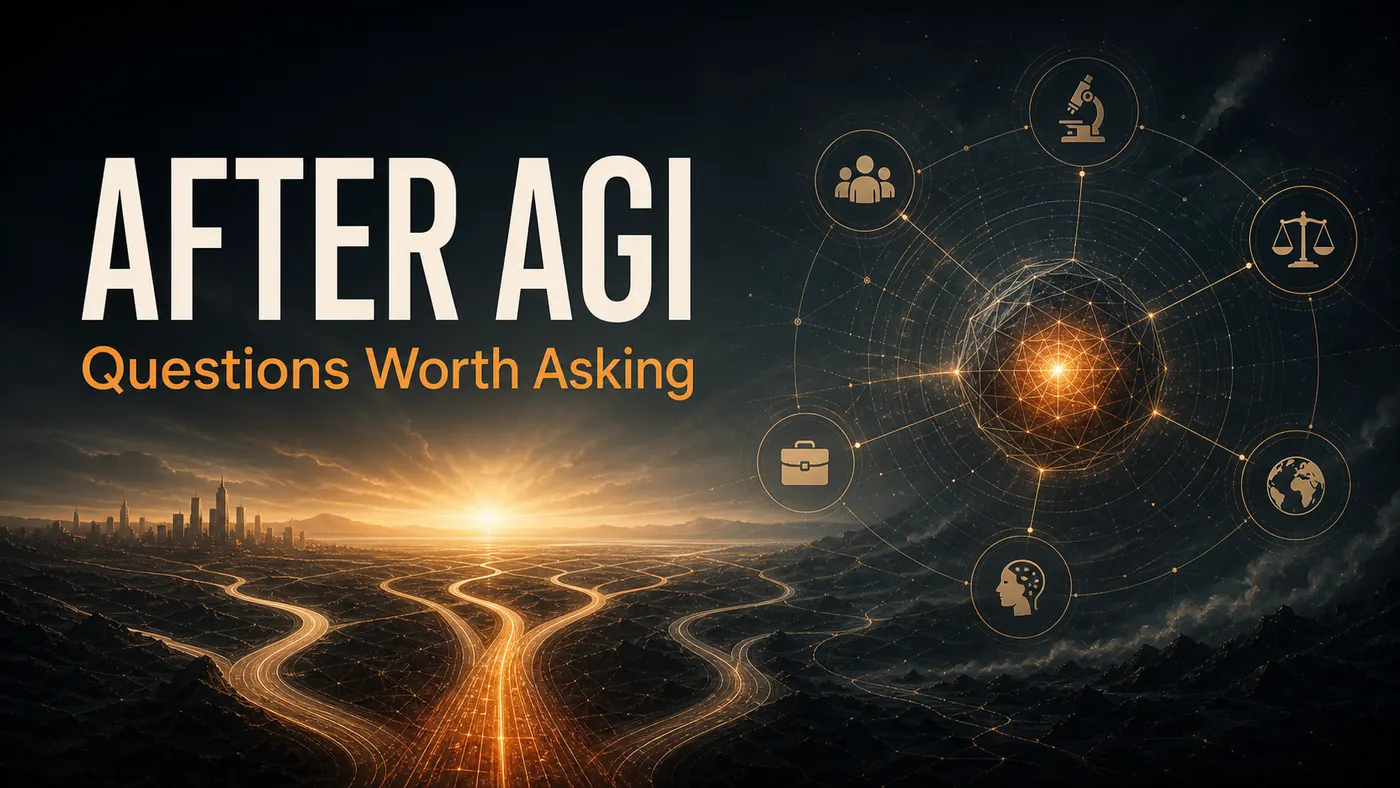
The future question is not only "How smart will AI become?" It is also "How good will we become at using it responsibly?"